

2024 is going to be a challenging, as well as exciting year for commercial real estate (CRE) developers and investors.
The capital markets remain tight, interest rates remain high, and traditional office demand is slipping. This makes it even more crucial than ever to understand what actually drives property sales under such conditions.
At Cindy Hopkins Commercial Real Estate (CHRE), our seasoned professionals can help clients adapt to such changes and stay competitive in challenging times, which is what brings us to this post. Here’s what makes a commercial property sell faster, especially in today’s tight capital market.
Economic Resilience Supports Select Property Types
The GDP growth is slowing down, but the US economy is still showing resilience.
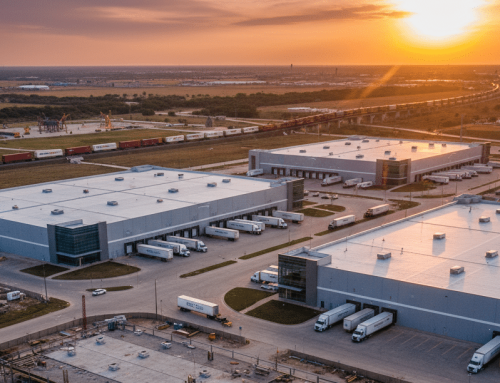
Consumer spending still remains strong, which is why it is able to support sectors like retail, multifamily, and industrial real estate. Retail properties are also experiencing a boost, all thanks to rebounding consumer sentiment, while e-commerce continues to fuel demand for warehouses and distribution centers. All of these factors lead to an increase in commercial properties, which is why they sell faster.
Property sellers must align their assets with current economic trends and weaknesses. This is why multifamily units with high occupancy rates or well-located retail spaces can attract more interest and move faster in today’s tight capital market.
Uncertainty Around Inflation Narrow Down Financing Windows
Even though inflation has eased in the US, the Federal Reserve still maintains a “higher for longer” interest rate stance.
This availability of limited capital is the reason why lenders are cautious, borrowing costs are up, and banks are stepping away from CRE lending.
For sellers, this presents the most attractive, well-priced, and low-risk opportunities for their commercial properties, as they are now getting attention. Properties that come with clean titles, reliable tenants, or stable cash flow are more likely to sell quickly. And no one would even demand aggressive price cuts.
Debt Maturity Pressures Create Urgency
Thousands of CRE loans were taken during the low-rate era, which is the reason they are now reaching maturity. Many property owners are now facing refinancing challenges and distress. The “debt wall” that is created has presented both a risk and an opportunity for property sellers.
Sellers facing the debt wall and intimidated by market turbulence are motivated by looming loan obligations and thus pricing their commercial properties competitively to move quickly.
On the other side, on the buyer side, investors are ready with capital and actively seeking these deals. They are hoping to capitalize on price dips, but if you’re in a position to sell your commercial property before hitting the debt wall, act fast.
Repurposing Underused Office Spaces Can Add Value
Office properties continue to be a weak link in the landscape of commercial properties.
They have high vacancy rates, and their valuations are dropping as well.
However, investors are finding ways to repurpose these underperforming commercial assets by converting them into mixed-use spaces, such as retail hubs or even residential units.
Sellers who are proactively repositioning their office assets can do so by adding amenities or targeting new tenants. In this way, they can make these properties more appealing and sell faster.
Conclusion
2024’s tight capital market has presented its fair share of challenges, but smart property owners and investors are still closing deals.
The key here is to align your strategies with resilient sectors, price strategically, and prepare for market trends. At CHRE, we can help clients who want to navigate these complexities with strategies supported by decades of expertise.
So, if you’re a property owner who wants to sell your commercial property in this market, get in touch with our team today.



Leave A Comment