
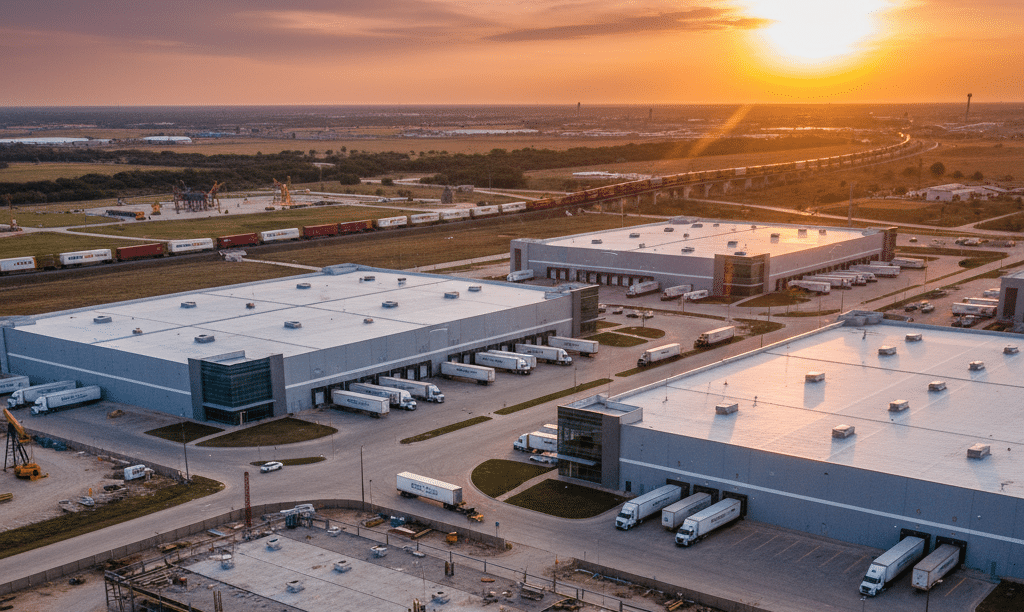
Across the U.S.–Mexico border, a significant shift in manufacturing strategy is taking shape. Many companies that once relied on factories thousands of miles away are now bringing production closer to home.
It’s a move known as nearshoring. If you’re thinking this shift is about saving on shipping… Not entirely. This shift is about control, speed, and resilience. And South Texas has become one of the most attractive destinations for this new wave of investment.
Why Nearshoring Texas Is Gaining Momentum
For years, manufacturers built global supply chains that stretched across oceans. It worked well until disruptions, from shipping delays to geopolitical tensions, exposed the risk of being too far from customers. Now, more businesses want to be close enough to manage operations directly and deliver products quickly.
South Texas offers exactly that advantage. Its proximity to Mexico gives companies access to a skilled, cost-efficient workforce while remaining close to U.S. distribution networks. Border cities such as Laredo, McAllen, Pharr, and Brownsville are seeing a steady rise in manufacturing relocation and new industrial park developments, as more companies look to shorten the distance between production and delivery.
The South Texas Advantage
When manufacturers compare potential nearshoring sites, three factors often rise to the top: logistics, cost, and connectivity. South Texas performs well across all three.
- Logistics:A strong network of interstate highways, rail systems, and border crossings links the region to major U.S. markets like Dallas, Houston, and beyond.
- Cost:Industrial land and operating expenses remain more affordable than in larger metropolitan hubs.
- Connectivity:Cross-border access allows companies to coordinate seamlessly between Mexican production plants and U.S. distribution centers.
These factors explain why developers are investing in build-to-suit warehouses, cold storage facilities, and distribution centers throughout the region. For tenants, it’s about reliability — less distance, less downtime, and more control over inventory.
Policy Support and Economic Incentives
Nearshoring growth isn’t happening in isolation. Trade agreements and local incentives have created a business-friendly environment that encourages long-term investment. The U.S.–Mexico–Canada Agreement (USMCA) simplified trade procedures and strengthened North American manufacturing ties.
Meanwhile, Texas border cities are attracting companies with tax abatements, infrastructure support, and workforce training grants. Together, these programs make South Texas one of the most competitive regions for industrial development in the country.
Workforce and Infrastructure: The Foundation for Growth
Choosing a location is never just about real estate. Companies also consider workforce readiness, power reliability, and infrastructure. South Texas communities are preparing for that demand. Local universities and trade schools now offer programs in manufacturing technology and logistics management, helping businesses find trained employees faster. On the infrastructure side, ongoing upgrades to ports, bridges, and highways are improving efficiency for freight carriers and exporters alike. These improvements make the region more than a production base. They make it sustainable for long-term industrial growth.
What It Means for Investors and Developers
For investors, this shift translates into opportunity. The industrial real estate in South Texas market continues to expand as more manufacturers and logistics firms secure warehouse and distribution space. Land near major ports of entry and highway corridors is in high demand, often getting repurposed into assembly plants, distribution hubs, or multitenant logistics parks. What’s happening now is not a short-term reaction; it’s a long-term realignment of where goods are made and how they move.
Closing Thought
Nearshoring is rewriting how and where things are made. For South Texas, it’s not just an economic story; it’s a regional transformation built on trade, people, and opportunity.
If you’re ready to explore how this shift could benefit your next project, Cindy Hopkins Real Estate can help you navigate it. From finding prime industrial land to connecting you with the right local partners, we make South Texas opportunities move as fast as the markets they serve.
Reach out today; the border boom is already underway, and the best sites don’t stay vacant for long!


Leave A Comment